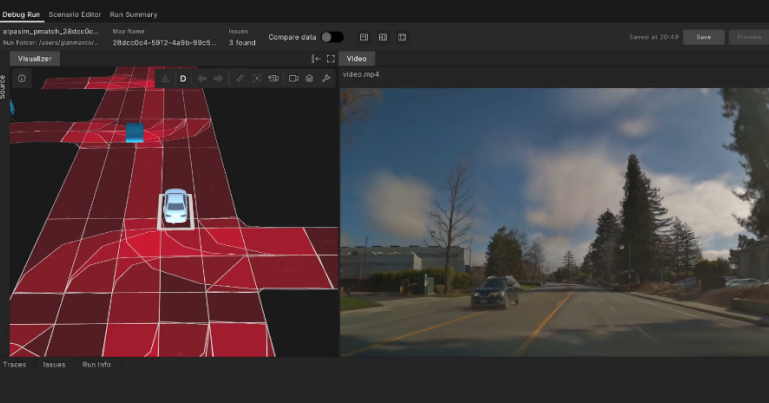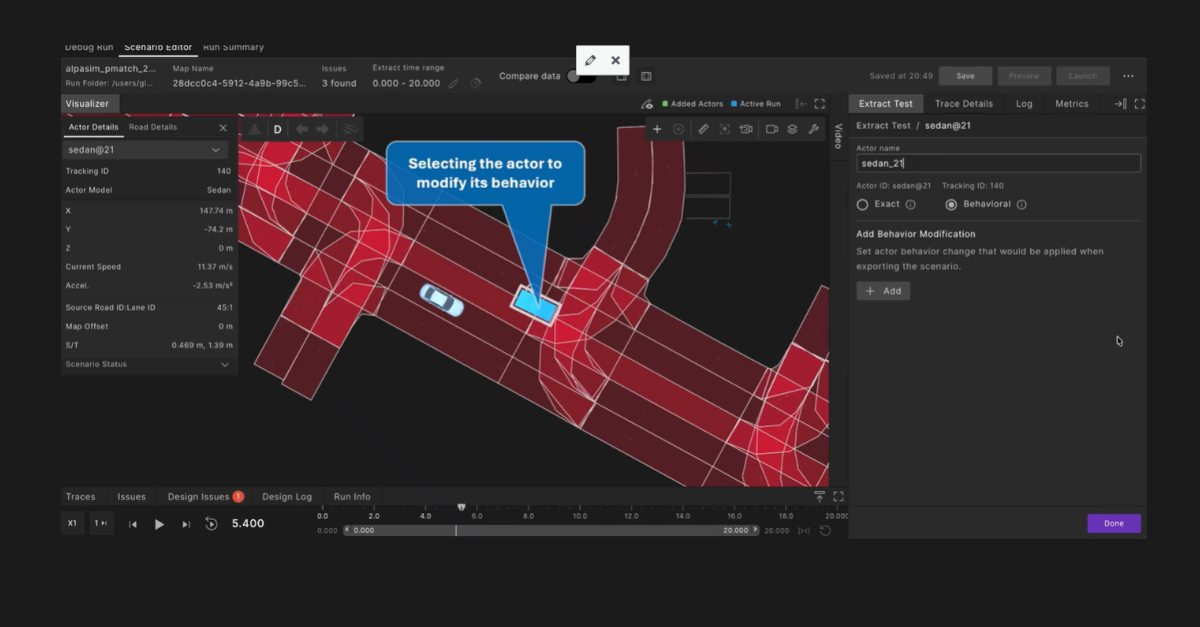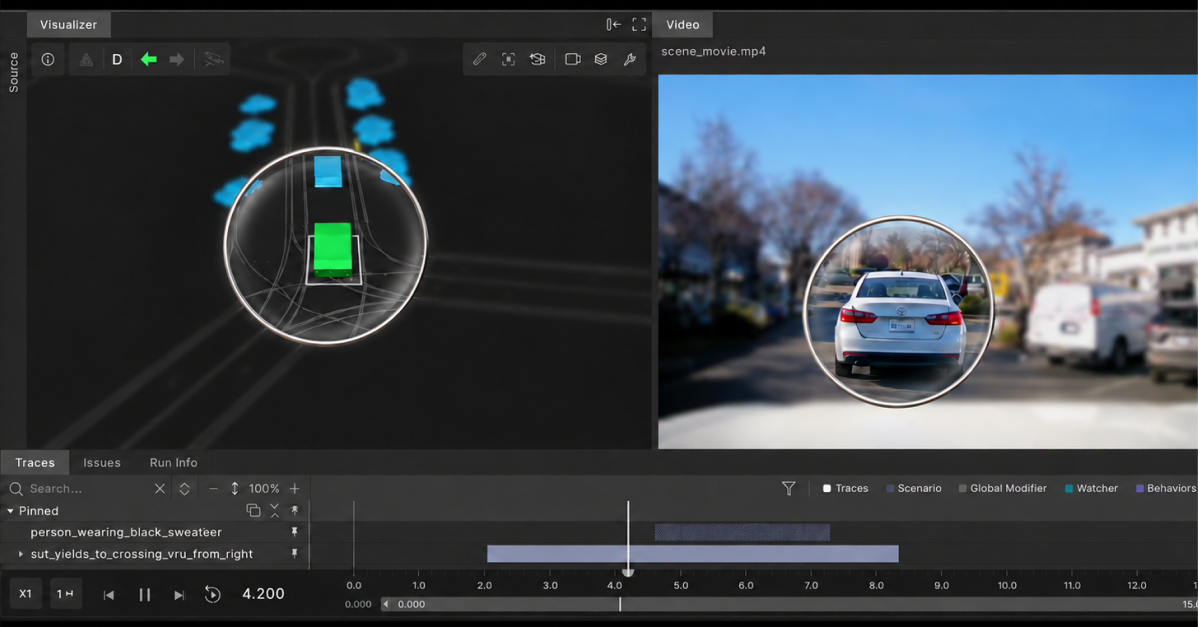
Coverage analysis helps developers identify testing gaps, prioritize scenarios and maintain safety evidence as AV systems evolve.
SUNNYVALE, CA (Oct. 21, 2026), Foretellix, the leading provider of development and validation toolchains for safe AI-powered autonomy, today announced coverage-driven validation capabilities that support autonomous vehicle safety evaluation with NVIDIA Halos SAFE (Safety Assurance Framework for Evaluation). These capabilities help developers understand which driving scenarios they have tested, identify gaps and prioritize additional validation as their systems evolve.
NVIDIA Halos is a full-stack safety system for building, evaluating, and deploying safer autonomous vehicles and robots. Within this system, Halos SAFE supports repeatable AV safety evaluation by connecting scenario libraries, simulation and KPI evaluators with real-world test results. It helps developers evaluate vehicle safety performance, assess simulation credibility and generate traceable evidence for safety assessments.
Foretellix contributes coverage evidence showing which scenarios and operating conditions have been tested against defined safety requirements, and where gaps remain. This helps engineering teams interpret performance results in the context of test coverage and focus further evaluation on conditions relevant to their safety cases.
Halos SAFE assesses whether an AI-powered system meets the safety requirements for deployment. Global regulations are moving beyond DCAS to advanced autonomy such as Euro NCAP and the upcoming UNECE R185, driving a growing need for an industry aligned safety assessment framework. Foretellix aligns to the Halos SAFE framework by answering the question that determines whether those results are derived systematically enough to hold in a well-structured safety case. Because end-to-end and reasoning-based systems change with every training cycle, that answer has to be updated as continuously as the AI itself.
Foretellix’s agentic AI workflows align to Halos SAFE in a continuous evaluation loop:
- Analyze real-world driving: turn fleet and test-track data into scenario intelligence, the starting point for assessment.
- Measure test coverage: quantify which scenarios and conditions have been tested against relevant requirements and protocols.
- Curate data: select driving data and scenarios that matter for each assessment.
- Identify and close gaps: generate additional scenarios and synthetic data for evaluation within the Halos SAFE workflow.
- Run again: repeat the loop as the AI and the system evolve, keeping coverage evidence current.
The result is continuously updated coverage evidence across the desired operational design domain (ODD). Combined with Halos SAFE evaluation results, this evidence helps developers identify where further testing is needed and maintain their safety cases throughout development and deployment.
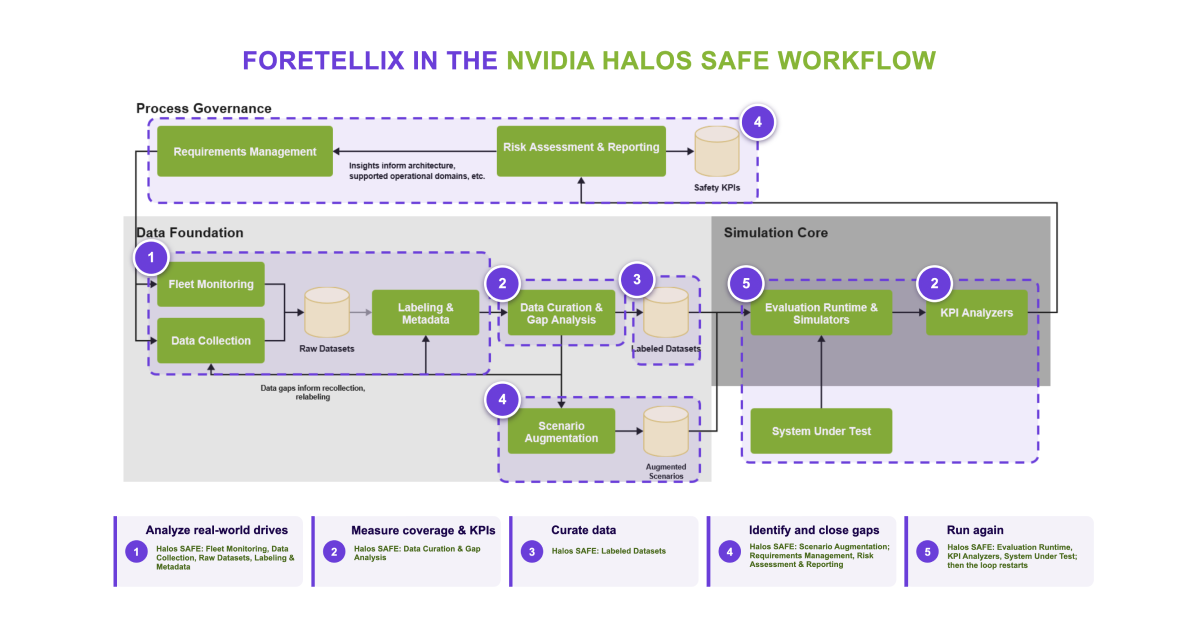
Fig: Foretellix workflow aligned to the NVIDIA Halos SAFE framework
“Physical AI learns faster than any team can write a test plan, so how fast it reaches the world depends on how convincingly we can prove its safety,” said Ziv Binyamini, CEO and Co-Founder of Foretellix. “NVIDIA Halos provides the guidelines for how safety is built, tested, and assessed. Coverage proves the assessment is complete, and by adopting the new Halos SAFE framework, we make that proof continuous and measurable.”
“Building confidence in autonomous vehicle safety requires evidence of both system performance and how thoroughly it has been tested,” said Riccardo Mariani, vice president of industry safety at NVIDIA. “Foretellix’s alignment with NVIDIA Halos SAFE helps developers identify gaps in testing and strengthen their safety cases as their systems evolve.”
About Foretellix
Foretellix enables the safe deployment of Physical AI at scale. Foretellix’s agentic AI workflows enable continuous validation at massive scale: turning real-world data into scenario intelligence, exposing gaps, and generating missing data, so you can deploy with safety evidence that keeps pace with development.