


You’re joining our board as Temasek’s representative, what about our technology, team, and vision excites you?
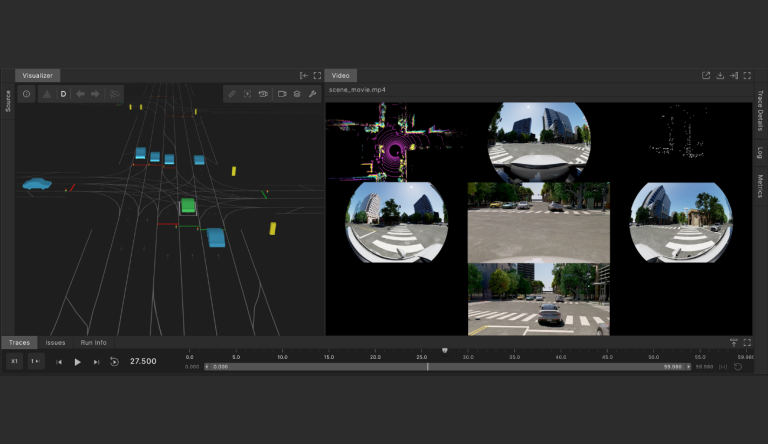
What excites me about working with the Foretellix team is that they are offering a comprehensive solution to a critical issue that OEM’s and Tier 1’s are facing during the development of Level 2++, 3 and 4 advanced mobility systems. Namely, the move from a patchwork of tools and an “island of automation” approach to a fully integrated tool chain that is able to much more effectively leverage virtual development as well as seamlessly integrate each step in the system development process.
You’ve led innovation in the automotive world for decades. What’s one lesson from your time as CTO that you think will be especially valuable on the journey toward safe, scalable autonomy?
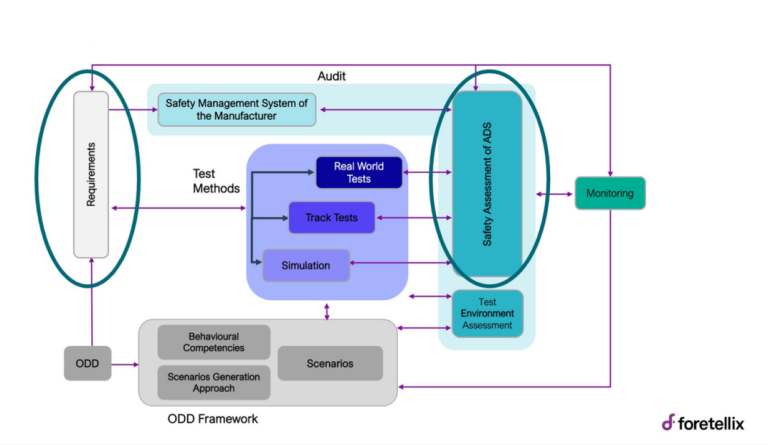
It may sound basic, but it’s the importance of discipline in the execution of the system development process – what we often refer to as the “System V”. From requirements gathering, analysis and allocation to development, to component and system validation; the ability to complete and verify each step is critical to a successful outcome. The challenge, however, is always time and resources … the clock is running, deliverable deadlines are on top of you. That’s why Foretellix’s solution is so compelling for me – as an integrated tool chain with its powerful simulation capabilities, it not only makes the development process much more efficient it also makes it much more effective at each step and is well positioned for AV companies transitioning to Physical AI. This is absolutely required to deliver these highly complex autonomous solutions.
From your vantage point, what must the industry get right to unlock mass deployment of autonomous vehicles?
I believe there are several key points that will need to be addressed.
- The first relates to system training and validation testing coverage – driving is incredibly complex and traditional methods simply haven’t been able to account for all corner cases. The approach of simply driving millions of miles won’t get us there – especially when you begin to factor in weather and other variables. This will significantly limit the achievable ODD’s and scale of deployment.
- The second is cost – both development cost and system cost (on the vehicle). The current approach has seen many billions spent on development with relatively limited deployment. Additionally, the cost of these systems has meant that for personal owned vehicles, Level 3 systems have only achieved a very small volume – they are still a premium option on a premium vehicle from a premium OEM. The situation with commercial autonomy isn’t much (if at all) better with significant on-costs to enable the autonomous operation … meaning that the commercial viability of autonomous mobility is years away.
There’s been a lot of promise around AVs, but also a fair amount of setbacks. Where do you see the biggest gap between expectation and reality, and how can a company like Foretellix help close that gap?
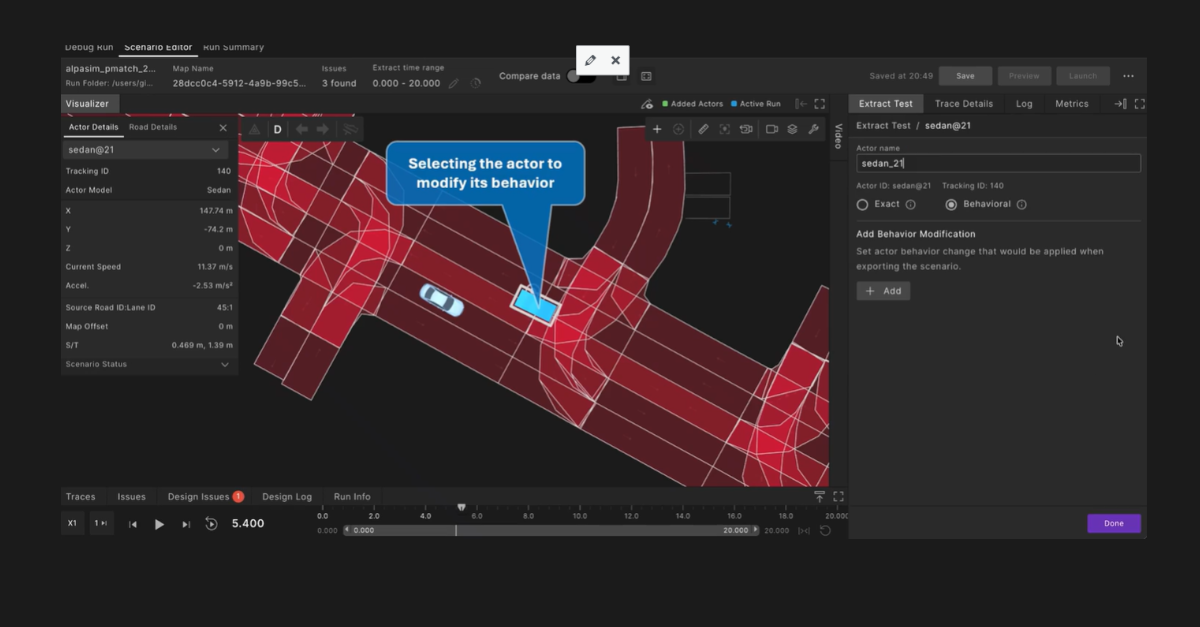
If you think about the current barriers (reference the prior question), Foretellix directly addresses all of these issues. Foretellix’s tool chain increases coverage of training data, simulation scenarios, and virtual validation which both accelerates the development of the system while also significantly reducing the development time and cost. This enables the developer to deploy the feature or vehicle with much greater confidence in its performance capability and quality.
Looking five years ahead, what will separate the winners from the rest in autonomous driving, and what role do you envision Foretellix playing in that future?
One of the key differentiators for the winners is they will be able to deliver safe Physical AI and have the right balance and integration between virtual development and real-world physical testing. That is where Foretellix is a key enabler – they bring the real-world and the virtual world together in a seamlessly integrated tool chain and that is the future of automated mobility system development.
About Glen De Vos
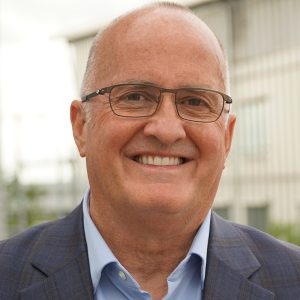 |
Mr. De Vos has over 30 years of senior leadership experience in automotive and industrial technology sectors, particularly around autonomy and mobility. In his career he has held a number of leadership roles at Aptiv and its predecessor Delphi Automotive. Positions included Chief Technology Officer and President of the Advanced Safety and User Experience business unit. He currently serves as the CEO of MicroVision, Inc. Mr. De Vos holds degrees in Mechanical Engineering and Business Administration from Calvin University, University of Michigan, and Ball State University. Mr. De Vos is joining the Foretellix Board of Directors as a representative of Temasek. |