You’re joining our board as Temasek’s representative, what about our technology, team, and vision excites you?

What excites me about working with the Foretellix team is that they are offering a comprehensive solution to a critical issue that OEM’s and Tier 1’s are facing during the development of Level 2++, 3 and 4 advanced mobility systems.  Namely, the move from a patchwork of tools and an “island of automation” approach to a fully integrated tool chain that is able to much more effectively leverage virtual development as well as seamlessly integrate each step in the system development process.

You’ve led innovation in the automotive world for decades. What’s one lesson from your time as CTO that you think will be especially valuable on the journey toward safe, scalable autonomy?

It may sound basic, but it’s the importance of discipline in the execution of the system development process – what we often refer to as the “System V”.  From requirements gathering, analysis and allocation to development, to component and system validation; the ability to complete and verify each step is critical to a successful outcome.  The challenge, however, is always time and resources … the clock is running, deliverable deadlines are on top of you.  That’s why Foretellix’s solution is so compelling for me – as an integrated tool chain with its powerful simulation capabilities, it not only makes the development process much more efficient it also makes it much more effective at each step and is well positioned for AV companies transitioning to Physical AI.  This is absolutely required to deliver these highly complex autonomous solutions.

From your vantage point, what must the industry get right to unlock mass deployment of autonomous vehicles?

I  believe there are several key points that will need to be addressed.

  1. The first relates to system training and validation testing coverage – driving is incredibly complex and traditional methods simply haven’t been able to account for all corner cases. The approach of simply driving millions of miles won’t get us there – especially when you begin to factor in weather and other variables.  This will significantly limit the achievable ODD’s and scale of deployment.
  2. The second is cost – both development cost and system cost (on the vehicle).  The current approach has seen many billions spent on development with relatively limited deployment.  Additionally, the cost of these systems has meant that for personal owned vehicles, Level 3 systems have only achieved a very small volume – they are still a premium option on a premium vehicle from a premium OEM.  The situation with commercial autonomy isn’t much (if at all) better with significant on-costs to enable the autonomous operation … meaning that the commercial viability of autonomous mobility is years away.

There’s been a lot of promise around AVs, but also a fair amount of setbacks. Where do you see the biggest gap between expectation and reality, and how can a company like Foretellix help close that gap?

If you think about the current barriers (reference the prior question), Foretellix directly addresses all of these issues.  Foretellix’s tool chain increases coverage of training data, simulation scenarios, and virtual validation which both accelerates the development of the system while also significantly reducing the development time and cost.  This enables the developer to deploy the feature or vehicle with much greater confidence in its performance capability and quality. 

Looking five years ahead, what will separate the winners from the rest in autonomous driving, and what role do you envision Foretellix playing in that future?

One of the key differentiators for the winners is they will be able to deliver safe Physical AI and have the right balance and integration between virtual development and real-world physical testing.  That is where Foretellix is a key enabler – they bring the real-world and the virtual world together in a seamlessly integrated tool chain and that is the future of automated mobility system development. 

About Glen De Vos

Mr. De Vos has over 30 years of senior leadership experience in automotive and industrial technology sectors, particularly around autonomy and mobility. In his career he has held a number of leadership roles at Aptiv and its predecessor Delphi Automotive. Positions included Chief Technology Officer and President of the Advanced Safety and User Experience business unit. He currently serves as the CEO of MicroVision, Inc.

Mr. De Vos holds degrees in Mechanical Engineering and Business Administration from Calvin University, University of Michigan, and Ball State University.

Mr. De Vos is joining the Foretellix Board of  Directors as a representative of Temasek.


Authors: Katie Washabaugh, Product Marketing Manager of AV Simulation at NVIDIA and Ohad Schwarzberg VP Product and AI at Foretellix

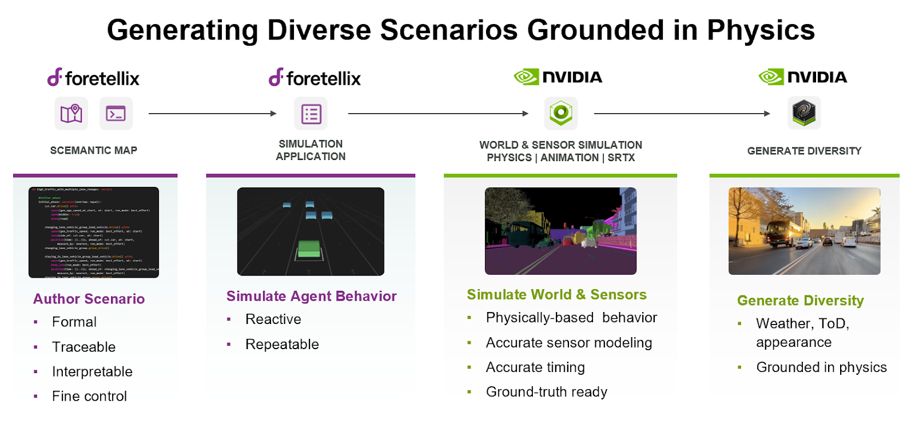
Foretellix is expanding its integration with the NVIDIA Omniverse Blueprint for Autonomous Vehicle (AV) Simulation to include NVIDIA Cosmos Transfer World Foundation Model and Video Data Search. These newly announced capabilities enhance Foretellix Foretify’s behavioral scenario generation with greater diversity in weather, lighting, and geolocation. Additionally, Foretify’s advanced behavioral search is enhanced leveraging Cosmos’s sensor domain search capabilities. These enhancements accelerate AI-powered AV training and validation for faster development and deployment. Foretellix, one of the first AV toolchain providers to integrate NVIDIA Omniverse, is now adopting Cosmos Transfer for enhanced AV simulation.

Foretellix with NVIDIA Omniverse Blueprint for AV Simulation & NVIDIA Cosmos

There is a change happening in the AV industry. It’s in a state of transition. Moving from rule-based architectures to hybrid AI-powered AV stacks that blend AI’s capabilities with rule-based safety measures. This is being driven by advances in deep learning and computational power, along with the cost and time demands of traditional software-based AV development. 

End-to-end models integrate AV functions using deep neural networks, mapping sensor inputs (e.g., cameras, lidar, radar) directly to driving actions. This approach improves adaptability, reduces latency, and enhances generalization to novel scenarios by leveraging large-scale driving data.

While real-world data collection provides a foundation for AV development, it is extremely difficult to cover the full variation of physical aspects of every scenario (weather, lighting, speed, distance, etc.), rare edge cases, and the scenarios in the full operational design domain (ODD). However, this type of data is essential for accelerating safe AV deployment and can be generated with cost-effective data automation of massive amounts of varied and realistic data.

Foretify + Cosmos Transfer

By leveraging NVIDIA Cosmos Transfer as part of Foretellix’s integration of the NVIDIA Omniverse Blueprint for AV Simulation, Foretellix’s data-automation development toolchain is delivering even greater scalability and diversity in data for effective AV training and validation for AI-powered stacks. This integrated solution provides users with powerful capabilities, including:

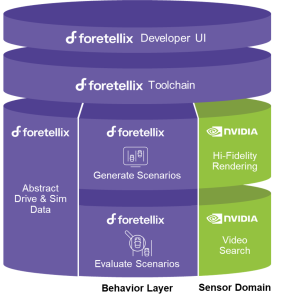
  1. Foretify’s behavior layer for scenario evaluation and generation
  2. NVIDIA’s Omniverse and Cosmos Transfer for high-fidelity sensor simulation

NVIDIA Cosmos Transfer is part of the Cosmos platform of state-of-the-art generative world foundation models (WFM), advanced tokenizers, guardrails, and an accelerated data processing and curation pipeline built to accelerate the development of physical AI systems such as autonomous vehicles and robots. Cosmos Transfer connects to Omniverse to generate new data within physically based virtual environments, turning any driving scenario generated by Foretellix Foretify into hundreds of realistic variations. 

Foretellix Foretify is a data automation toolchain that accelerates the development of AV systems by combining real-world driving data with advanced virtual simulations and using it for both training and validation. Foretellix’s “Evaluate >> Generate” approach to AV development can be broken down into four stages:

  1. Foretify unifies, curates, and cleanses existing real-world drive log and sim data 
  2. Foretify evaluates the data to validate the performance and quality in specific drive logs according to defined KPIs
  3. Foretify generates variations of real-world scenarios and uses the physics-based rendering capabilities of Omniverse and Cosmos Transfer to create hyper-realistic sensor simulation data to train the AI-powered AV stack
  4. Foretify evaluates the complete drive data to measure ODD coverage, use as data driven evidence for safety reports, identify gaps, and generate abstract scenarios to close the gaps for system validation

Foretellix Behavior Layer & Sensor Domain

The NVIDIA Omniverse Blueprint for AV Simulation is a reference workflow to create rich 3D worlds for training, testing, and validation. The blueprint contains APIs and services, such as Sensor RTX APIs for sensor simulation, to build and enhance digital twins from real-world sensor data, model physics and behavior of dynamic objects in a scene and generate physically accurate and diverse sensor data.

With this API-based architecture, the blueprint seamlessly integrates into existing workflows and tools like Foretify. This enables developers to replay driving data, generate new ground truth data, and perform closed-loop testing.

With Cosmos Transfer, Foretify can amplify the diversity of sensor data rendered by Sensor RTX, varying the visual appearance of the scene, from weather to graffiti to dirty lenses—even to new ODDs. Cosmos Transfer Video Data Search includes a robust capability for presentation level video search and high-fidelity rendering. Foretify’s native behavioral search capability at the logic level enhances scenario evaluation and generation, seamlessly complemented by Cosmos Transfer. The result is seamless scalability in data for training and validation, easing costly bottlenecks in the AV development pipeline.

Looking Ahead

As AVs become increasingly autonomous and rely more on AI to power the AV stack, the need for a controllable, predictable and repeatable data-automation toolchain to validate and train the AV stack will only grow. Foretellix’s integration of Cosmos Transfer via the NVIDIA Omniverse Blueprint for AV Simulation represents a major step forward in empowering developers to create the meaningful and realistic data required to rapidly develop, train and validate robust and safe AI-powered AV solutions at scale. By bridging advanced scenario-based training with high-fidelity simulation, this partnership is helping pave the way for the future of autonomous mobility.

See Innovation in Action

Are you ready to see the Foretellix Foretify development toolchain with high-fidelity sensor simulation in action? Visit Foretellix at NVIDIA GTC in San Jose at booth 1543 from March 18-21 or visit the Foretellix website to discover how this groundbreaking integration can supercharge your autonomous vehicle development process and help you launch with confidence.

Short on time? Below is a podcast summary of this blog, generated by Google NotebookLM.

The automotive industry is undergoing a transformative shift. For the first time, regulators are acknowledging virtual testing and simulation as valid inputs for certification and type approval in the upcoming UN regulation #152. This is not just a minor update—it’s a significant milestone that fundamentally changes the way safety and performance standards are approached, especially for advanced vehicle systems like Advanced Emergency Braking Systems (AEBS).

UN regulation #152 allows virtual testing to be recognized as part of the AEBS certification process and is expected to be finalized by Q2 of 2025. While AEBS is the initial focal point, this amendment opens the door for virtual testing to potentially become a standardized method across various vehicle safety systems. For the industry, this shift in regulatory acceptance is not only necessary; it’s inevitable. As advanced vehicle systems become increasingly complex, traditional testing methods alone are insufficient to address the full spectrum of scenarios these systems must handle.

For companies like Foretellix, this regulatory change is both validating and promising. At Foretellix, we have long advocated for scalable, virtual testing solutions to support the growing demands of Driver Control Assistance Systems (DCAS) and advanced driving assistance systems (ADAS). Foretellix’s data-driven autonomy development toolchain is purpose-built for these challenges, enabling a level of scenario testing and validation that traditional methods cannot match. This amendment represents a critical role of virtual testing in meeting regulatory standards efficiently and effectively.

The Regulatory Shift: Moving from Physical to Virtual Testing in Vehicle Certification

Historically, certification and type approval processes for vehicle safety systems have relied almost exclusively on physical testing. Physical tests provide direct evidence of system reliability under controlled conditions, but they come with limitations. They are costly, time-consuming, and lack the flexibility to cover the wide array of real-world scenarios that autonomous vehicles (AVs) might encounter. Physical testing alone cannot feasibly replicate the myriad situations that vehicles face, particularly as AV and ADAS technologies grow in sophistication.

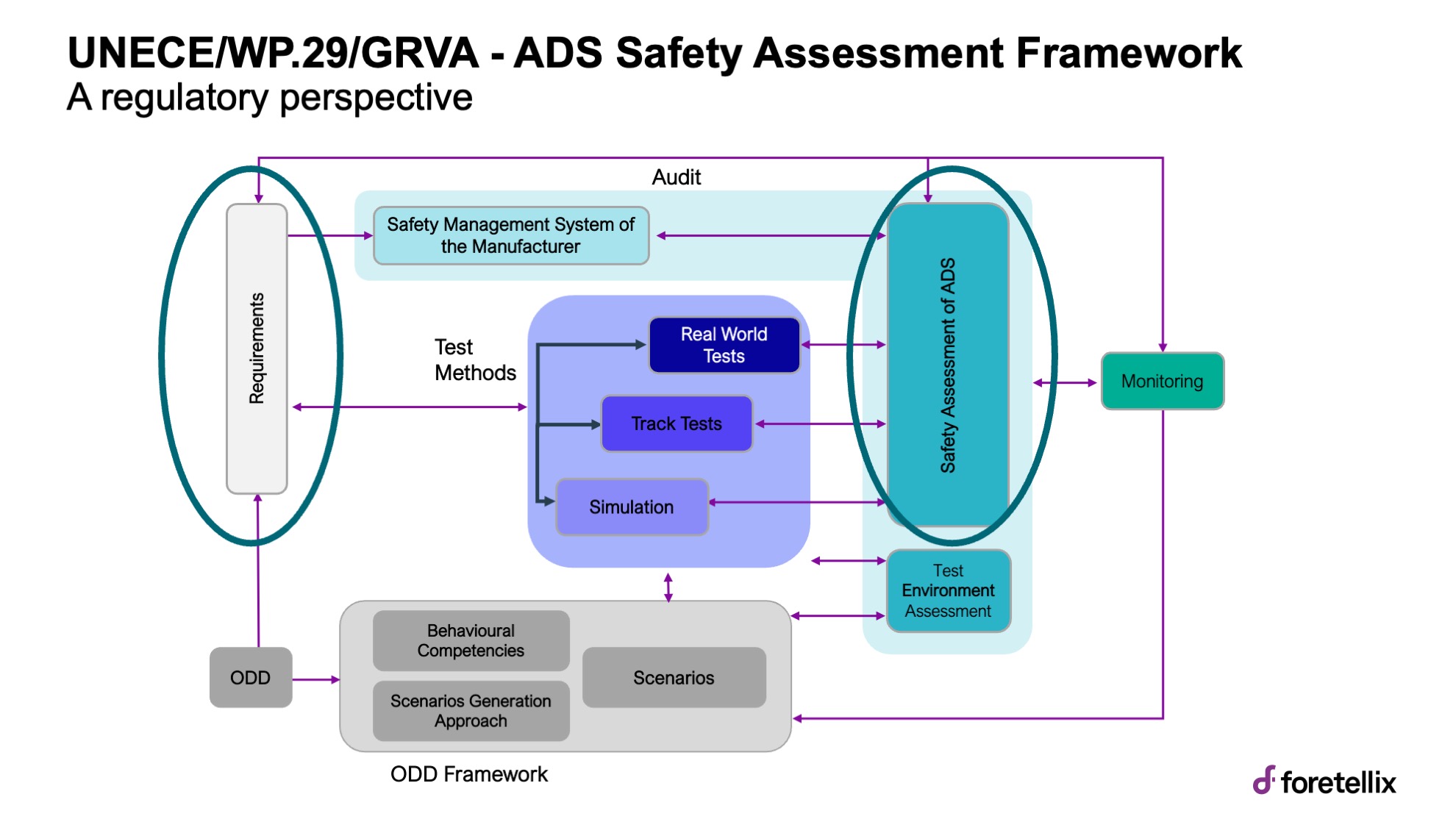
The UNECE’s Working Group on Automated/Autonomous and Connected Vehicles (GRVA) is addressing this challenge head-on. In the upcoming amendment to UN regulation #152, virtual testing can be used to certify the system. This regulatory change is a direct response to the industry’s need for more comprehensive and scalable testing methods that can keep pace with rapid technological advancements.

This amendment to the AEBS certification process is a pivotal moment. Not only does it officially recognize virtual testing as a credible and practical alternative to physical testing, but it also reflects a growing understanding among regulators that the industry needs a broader, more adaptable approach to testing. The UNECE/WP.29’s adoption of virtual testing for AEBS approval is a first step, and its success could pave the way for expanded virtual testing across other vehicle safety systems.

Source: https://unece.org/sites/default/files/2024-01/GRVA-18-50e_1.pdf

The New Testing Framework: Balancing Physical and Virtual Testing

Under the proposed framework, vehicle manufacturers will be allowed to use virtual testing for specific certification requirements. To maintain robust standards, at least 30% of the required tests must still be conducted physically, with at least one test for each scenario variant relevant to approval. Importantly, the virtual tests must be validated in accordance with Annex 4 of the regulation, ensuring that the simulations meet stringent reliability and accuracy standards.

This 30% physical testing requirement represents a balanced approach that blends the strengths of both physical and virtual testing. By retaining a portion of physical tests, the framework safeguards the integrity of the certification process, while the inclusion of virtual testing allows for broader and more complex scenario coverage. The 30% requirement is viewed as an initial benchmark, and there is an expectation that this threshold will decrease as virtual testing technology advances and gains further acceptance in regulatory circles.

This gradual shift toward a greater reliance on virtual testing is essential. As vehicle systems become more intricate, so do the scenarios in which they must operate safely. Virtual testing allows manufacturers to simulate an extensive range of driving conditions—from rare weather events to unique traffic scenarios—offering unparalleled insight into system performance and safety.

Foretellix’s Role: Leading the Virtual Testing Revolution

At Foretellix, we’ve anticipated this regulatory shift and have designed our Data-Driven Autonomy Development Toolchain to meet precisely these types of challenges. Our toolchain is built to facilitate a new era of vehicle validation, offering advanced scenario generation and evaluation to support comprehensive, scalable testing solutions. Our approach goes beyond merely addressing regulatory requirements—it enables our clients to achieve a depth of validation that sets a new standard for safety and reliability in the industry.

With Foretellix’s toolchain, manufacturers can simulate virtually any scenario, from common driving situations to extreme edge cases. The platform’s data-driven approach allows for in-depth analysis and validation, which is essential for meeting both current and future regulatory demands. By enabling our customers to test and validate their systems at scale, Fortellix’s development toolchain is more than a response to regulatory changes—it’s a proactive solution designed to address the fundamental challenges of AV and ADAS development.

The Broader Implications: What This Means for the Industry

This amendment marks the beginning of a new era for the automotive industry. By acknowledging virtual testing as part of the certification process, regulators are embracing a more comprehensive approach to safety validation. This shift holds significant implications for the future of AV and ADAS technologies, including:

  1. Efficient AI Validation:
    Support the shift to AI-centric end-to-end stacks by evaluating the performance of the entire system from sensor inputs to decision-making outputs, to uncover risks, edge cases, and potential gaps.
  2. Realistic Scenarios at Scale:
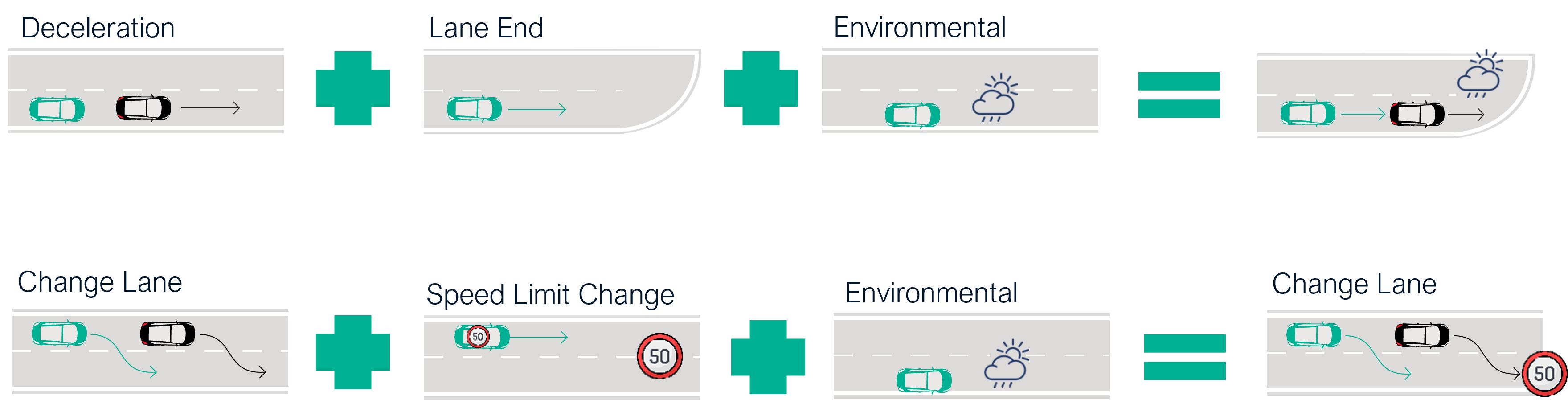
    Generate any number of training and test scenarios under diverse environmental, weather, and traffic conditions, including hazardous situations too dangerous to recreate on actual roads.
  3. High-Fidelity Sensor Simulation:
    Reduce dependency on physical prototypes by utilizing virtual testing to significantly lower development expenses and make cutting-edge safety systems more accessible to all.
  4. Continuous Improvement:
    Rendering physically based sensor data for camera, radar, and lidar, enabling the creation of training and testing datasets and supporting closed-loop testing to enhance development efficiency.

While AEBS is the initial focus of this amendment, the potential for virtual testing to expand across other vehicle systems is substantial. The automotive industry is increasingly moving toward a holistic, system-level approach to vehicle safety, and virtual testing is a natural fit for this evolution.

Looking Ahead: The Future of Vehicle Certification and Virtual Testing

The UN Regulation #152 amendment brings the industry closer to a future where virtual testing is an integral part of safety validation. As this approach gains acceptance, we can expect to see a gradual reduction in the required percentage of physical tests, further reinforcing the role of virtual testing as a core component of certification.

As the industry continues to evolve, Foretellix remains dedicated to pioneering new standards for vehicle validation, ensuring that advanced vehicle systems meet the highest safety and performance standards. With the power of virtual testing and the capabilities of Foretellix’s platform, the future of vehicle certification is not only achievable—it’s here.


The transition to AI-centric stacks and, specifically, end-to-end stacks in autonomous vehicles (AVs) promises to revolutionize mobility. While large foundation models can tackle the immense complexity of achieving higher levels of autonomy, its “black box” nature can introduce unique challenges. Building such autonomy requires the creation of a massive data flywheel to create diverse datasets for effective training, comprehensive validation, and evaluation of the AV stack’s performance. Achieving widespread coverage and diversity of sensor data is essential to large-scale AV deployment.

Effective training and testing of AI-centric AV stacks require massive amounts of varied and realistic data. These stacks need closed-loop validation as part of their Continuous Integration / Continuous Development (CI/CD) pipelines to identify gaps and regressions in AV stack performance throughout the development lifecycle. Furthermore, developers need hyper-realistic scenarios from the mundane, to the edge cases, and to situations too dangerous to test in the real world, to close these gaps and comprehensively test new versions of the stack.

To address these challenges, Foretellix is leveraging the fidelity and flexibility of the NVIDIA Omniverse platform into the Foretify™ toolchain to deliver a first-of-its-kind solution that transforms how AV developers train, test, validate, and accelerate the development and deployment of their systems.

Solving Industry Challenges with High-Fidelity Sensor Simulation

Physically Accurate Sensor Simulation for Generating Datasets at Scale

The Foretellix Foretify™ toolchain’s scalable scenario generation integrates the NVIDIA Omniverse Blueprint for AV simulation to provide developers with:

  • Efficient AI Validation:
    Support the shift to AI-centric end-to-end stacks by evaluating the performance of the entire system from sensor input to control output to detect gaps, edge cases, and risks.
  • Realistic Scenarios at Scale:
    Generate any number of training and test scenarios under diverse environmental, weather, and traffic conditions along with hazardous scenarios too dangerous for real-world testing.
  • High-Fidelity Sensor Simulation:
    Utilize the NVIDIA Omniverse Sensor RTX APIs to render physically based sensor data for camera, radar, and lidar to create both training and testing datasets, and enable closed-loop testing to accelerate development pipelines.

Solution Overview

  1. Foretify Evaluate:
    Foretify Evaluate enables the aggregation and comprehensive analysis of real-world driving logs and virtual/Sim drive data for training and validation, ensuring robust AV system development. Stack developers and V&V engineers can quantify scenario coverage, systematically identify gaps, and address critical edge cases such as urban intersections and adverse weather conditions. Tailored Key Performance Indicators (KPIs) provide actionable insights to ensure AV systems meet safety standards and requirements. The solution automates the evaluation of physical and virtual driving scenarios, integrating seamlessly with Foretify Generate to connect synthetic scenario generation, big data analytics, and sensor simulation workflows for training and testing. Scalable to handle fleet-wide data, this end-to-end solution accelerates iterative improvements, enabling developers to close coverage gaps effectively and ensure large-scale, safe AV deployment.
  2. Scalable Scenario Generation by Foretellix:
    Foretellix Foretify’s scenario-based data-driven development toolchain empowers AV developers to create and run any number of synthetic testing scenarios simultaneously. Through Foretify’s Smart Replay capabilities developers can generate variations of the original drive log, including perception parameter variations and maneuver modifications, to improve the validation of new AV software versions and evaluate the completeness of their AV systems while providing the fidelity and scale necessary to train, test, and close critical gaps for large-scale, safe deployment.
  3. High-Fidelity Sensor Simulation by NVIDIA:
    The NVIDIA Omniverse Blueprint for AV simulation is a reference workflow that includes the physics, animation, and behaviors to enable physically accurate sensor simulation. It uses NVIDIA Omniverse Sensor RTX APIs to render the camera, radar, and lidar data necessary for AV training, testing, and validation. Foretellix will be one of the first partners to adopt the recently announced NVIDIA Cosmos, a platform of open world foundation models for generating physics-based videos and environments to enhance Foretellix’s unique scenario search technology.

Unique Benefits and Exclusive Features

  • Comprehensive AI Evaluation Tools:
    Ensure consistency and prevent degradation across trained AI systems by evaluating and comparing performance metrics between versions.
  • Unparalleled Realism:
    The integration offers developers an exclusive, market-first capability to test their systems with high-fidelity sensor data.
  • Shorter Time to Market:
    Efficiently identify and address gaps earlier in the development cycle, reducing time and costs.
  • Confidence in Deployment:
    Enable safer and more reliable launches of autonomous vehicles by thoroughly validating systems in a virtual environment.

See Innovation in Action

Are you ready to see the Foretellix Foretify development toolchain with high-fidelity sensor simulation in action? Visit us at NVIDIA GTC in San Jose at booth 1543 on March 18-21 or book a personalized demo today to discover how this groundbreaking integration can supercharge your autonomous vehicle development process and help you launch with confidence.

ASAM OpenSCENARIO® DSL 2.1.0 (OSC DSL 2.1.0) is a human-readable scenario definition language that is a standardized format used to describe test scenarios for the development, testing, and validation of Advanced Driver-Assistance Systems (ADAS) and Automated Driving Systems (ADS) functions. The declarative domain-specific programming language is combined with a domain model, specifying entities with their properties.  

The language supports abstract, logical and concrete abstraction levels of scenario description.  In comparison, ASAM OpenSCENARIO® XML covers concrete and logical scenario abstraction but not abstract scenarios.

OSC DSL 2.1.0 is maintained and developed by the ASAM e.V. (Association for Standardization of Automation and Measuring Systems), a non-profit international organization focused on standardization in the automotive industry for automotive development and testing.  The ASAM standards are developed by industry experts from ASAM member companies.

This standard helps companies developing autonomous vehicle systems to efficiently test autonomous vehicles (AV) and advanced driver-assistance systems (ADAS), by allowing large-scale simulations for verification and validation (V&V) purposes that test the safety and functionality of AVs and ADAS.  The standard supports both physical and simulation testing. It focuses on building complex scenarios from reusable scenario descriptions, making testing faster and more efficient. 

Key characteristics of ASAM OpenSCENARIO® DSL:

  • Domain-specific: Designed specifically for the ADAS and ADS development landscape, ASAM OpenSCENARIO® DSL uses terminology and concepts familiar to engineers working in these fields. This makes it easier to create and understand test scenarios compared to general-purpose programming languages.
  • Focuses on intent: OSC DSL 2.1.0 allows specification of the overall goal or intent of the test scenario. This includes defining Key Performance Indicators (KPIs) that will be used to measure the success of the test. The language supports abstract, logical, and concrete levels of abstraction. This high-level approach enables engineers to explore the broader functionality space and identify potential edge cases or unexpected situations.
  • Reusable scenarios: Scenarios don’t have to be built from scratch every time. OSC DSL 2.1.0 allows for the creation of reusable scenario elements or modules. These modules can then be combined to form more complex scenarios, promoting efficiency and flexibility in test design.  The modules can be part of a library that can be used to create complex interactions and ODD conditions. 
  • Test Platform Support: Designed to support all test platforms: Software in the loop (SIL), Hardware in the loop (HIL), Vehicle-in-the-Loop(VIL), Model-in-Loop (MIL), and Proving Grounds.
  • Integrated with OpenDRIVE and OpenCRG: The ADAS and AD development process involves multiple aspects beyond just the scenario itself. OSC DSL 2.1.0 integrates seamlessly with other ASAM standards like OpenDRIVE, which describes road networks, and OpenCRG, which describes traffic signal configurations. This integration facilitates a holistic development environment where different components work together effectively.

OSC DSL 2.1.0 provides three different levels of abstraction:

ASAM OpenSCENARIO® DSL Code


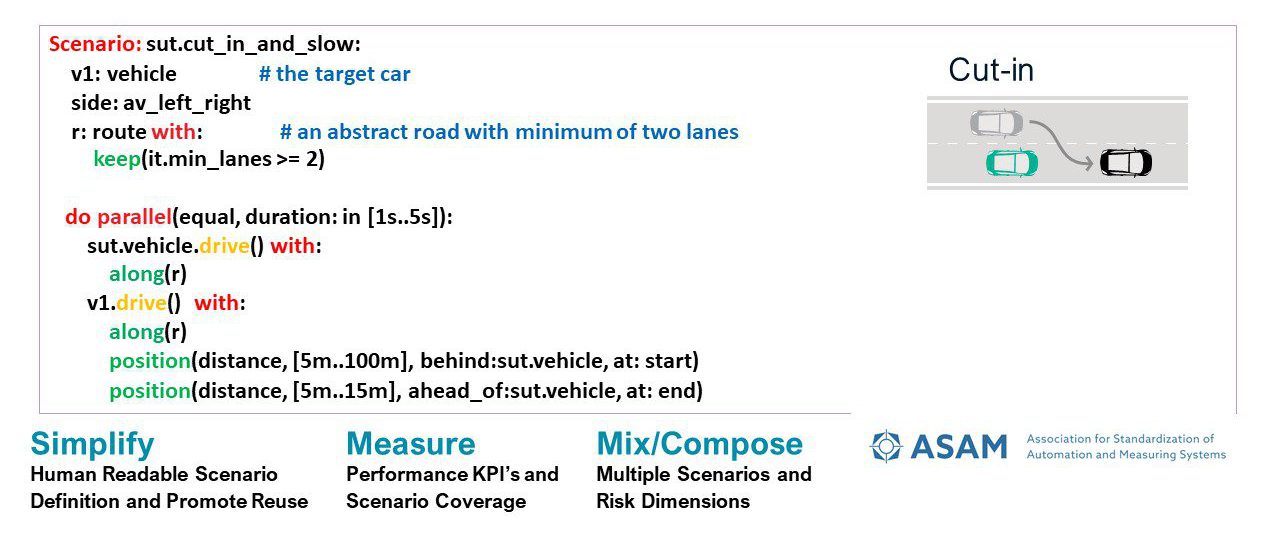
Scenario composition allows for combining simple scenarios in serial or parallel:

ASAM OpenSCENARIO® DSL Scenario


Road abstraction:

This feature is the ability to describe the features of the road network in an abstract way that influences the actor’s behavior during a scenario. The ability to use abstract road description enables creating scenarios according to given road topology, but without being tied to a specific map or location. This is key for reusing these scenarios in different locations.

Code example of road abstraction:

my_junction:junction
road_1, road_2, road_3, road_4: road
jr_12, jr_34:road

r1:map.roads_follow_in_junction(junction:my_junction, in_road: road_1, out_road: road_2, junction_route:jr_12)
r3:map.roads_follow_in_junction(junction:my_junction, in_road: road_3, out_road: road_4, junction_route:jr_34)

Comparison with ASAM OpenSCENARIO® XML:

It’s important to note that ASAM offers two OpenSCENARIO® standards:

  • OpenSCENARIO® XML: This standard utilizes an XML schema for describing scenarios. It focused on defining precise trajectories for vehicles and allows for detailed parameterization of various elements within the scenario. However, its focus on low-level details can make it less efficient for high-level scenario design and exploration.
  • OpenSCENARIO® DSL: In contrast, the focus of OpenSCENARIO® DSL is on the scenario’s intent and overall functionality. This makes it ideal for exploring the broader test space and facilitating the generation of a larger number of test cases.

Applications of ASAM OpenSCENARIO® DSL:

  • Virtual development, simulation, and testing: OSC DSL 2.1.0 plays a crucial role in creating simulated test environments for ADAS and AD functions. This enables engineers to identify and address potential issues before real-world testing is conducted.
  • X-in-the Loop: Hardware-in-the-Loop (HIL) and Software-in-the-Loop (SIL) simulations: HIL simulations involve testing ADAS and AD functions on actual hardware while simulating the surrounding environment. OSC DSL 2.1.0 can be used to create test specifications that guide these simulations, as well as SIL simulations.
  • Real-world driving data analysis and scenario reconstruction: Data gathered from real-world driving scenarios, including proving grounds, can be valuable for improving ADAS and AD systems. OpenSCENARIO® DSL can be used to reconstruct these scenarios for further analysis and development purposes.

File format:

OpenSCENARIO® DSL uses the *.osc file format.

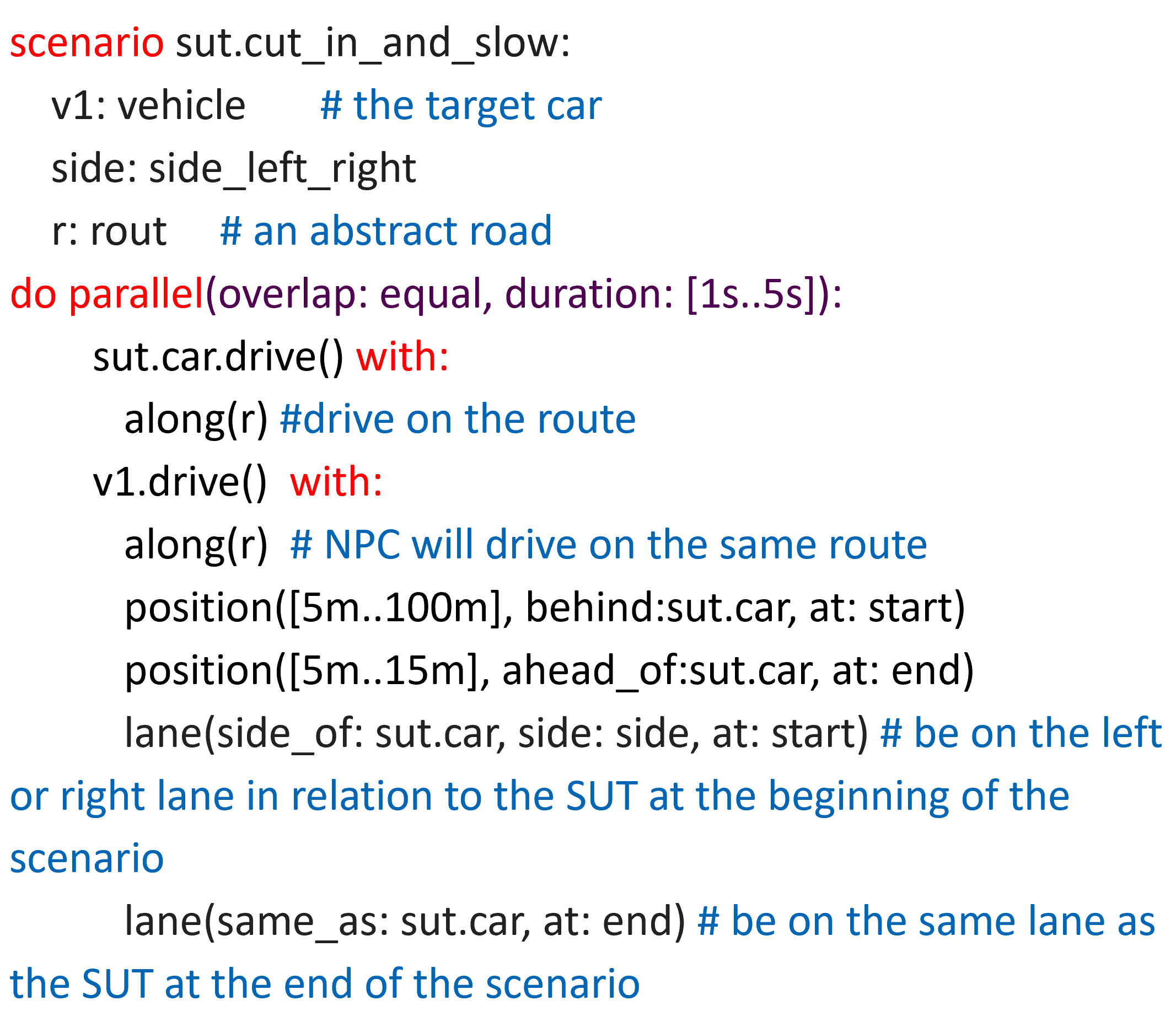
Code Sample for Lane Cut-in with 2 Vehicles:

OpenSCENARIO® 2.1.0 utilizes a dedicated domain-specific language (DSL), with the characteristics of a human and machine readable software programming language.

Here’s a code example using a simplified syntax:

ASAM OpenSCENARIO® DSL Code


This example represents a simplified scenario outlining the basic concept. Depending on your specific needs, you can further customize the code to include additional details like lane change distances, acceleration profiles, and sensor data generation.

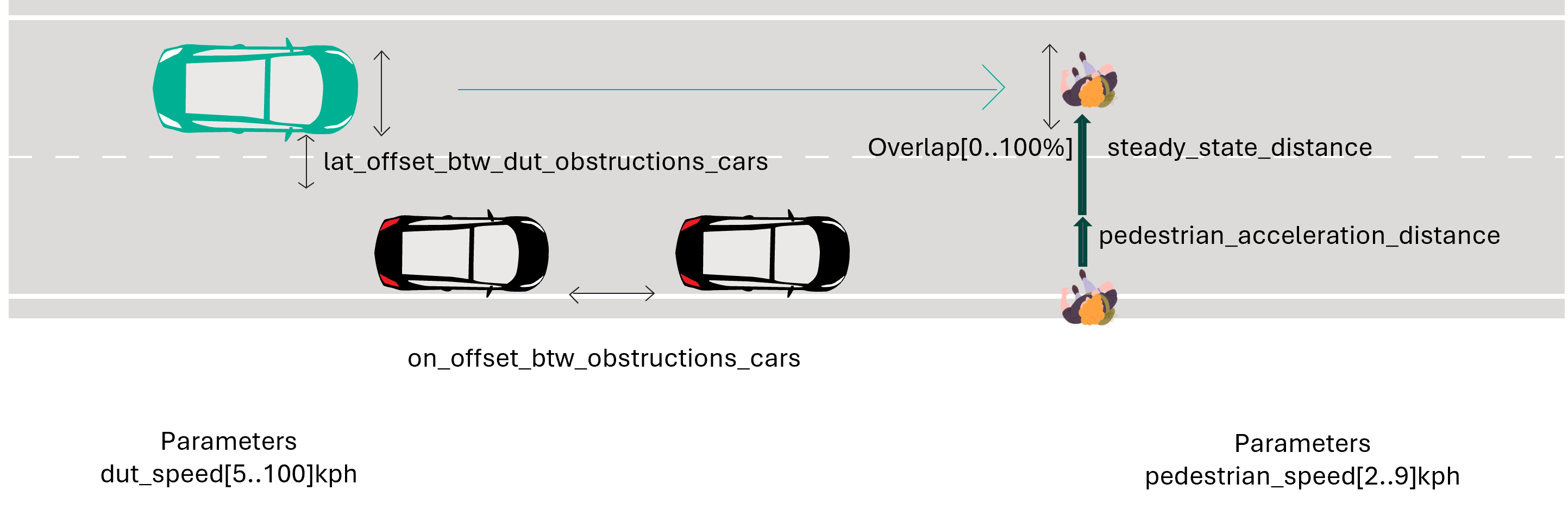
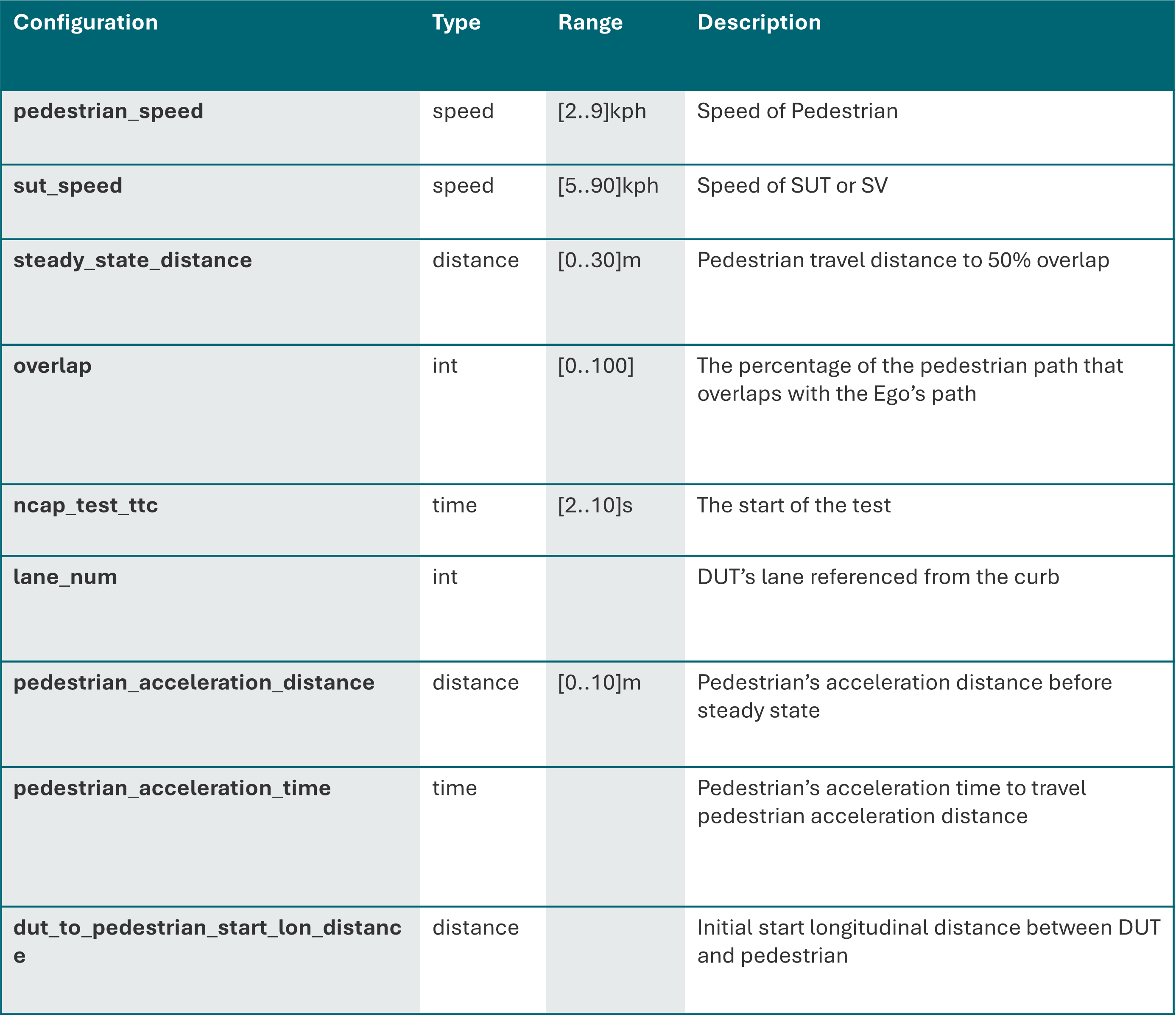
OSC DSL 2.1.0 Visual Example: NCAP Car to Pedestrian nearside child
This NCAP example is a scenario with the Ego (the DUT or SV) drives at different speeds towards a pedestrian. The pedestrian’s path overlaps the Ego’s path by various amounts.


ASAM OpenSCENARIO® DSL Scenario

ASAM OpenSCENARIO® DSL Code


Standard authors:

The authors contributing to the standard include the following organizations:
51WORLD High Technology Co.,Ltd., Akkodis Germany Consulting GmbH, AVENYR GmbH, AVL List GmbH, BMW Group, CARIAD SE, DENSO Automotive, dSPACE GmbH, Five AI, Foretellix Ltd, Fraunhofer Institut für Verkehrs- und Infrastruktursysteme IVI, e.V., Hexagon Manufacturing Intelligence GmbH, IPG Automotive GmbH, Luxoft GmbH, MathWorks, PMSF IT Consulting, RA Consulting GmbH, Robert Bosch GmbH, Siemens AG, Tencent, Torc Robotics, TraceTronic GmbH, Vayavya labs Pvt Ltd., Vector Informatik GmbH, Volvo Autonomous Solutions, Volvo Car Corporation

References:


Greetings and welcome to a brand new segment on our blog, “Under the Hood,” featuring industry experts. In this post, we’ll discuss how to use ODDs practically in your safety V&V. 

We’re thrilled to have Gil Amid, Foretellix’s Chief Regulatory Affairs Officer, VP of Operations & Co-Founder join us. Gil is a member of the ASAM Technical Steering Committee and has been instrumental in developing the ASAM OpenSCENARIO® 2.1 DSL (OSC DSL) standard.

Today’s interview is in a Q&A format, giving you the chance to gain firsthand insights from Gil into a deeper dive into how Operational Design Domain (ODD)-based scenario generation and coverage analysis can streamline V&V processes and ensure the safety and success of autonomous vehicles.

Welcome, Gil, and thank you for being here. Let’s start with the industry’s big question: Is autonomous technology safe enough for large-scale commercial deployment yet?

The short answer is “probably not yet.” In reality, that’s a question for regulators, who must ensure autonomous vehicles are safe. Currently, there are no standardized rating systems, like the five-star NCAP rating for traditional vehicles, to certify AV safety for commercial deployment. The EU’s regulation EU 1426 addresses this by requiring manufacturers to define and meet their safety criteria and demonstrate this to regulators. Essentially, manufacturers must create their own safety assessments to prove the safety of their AVs.

ISO 34503 is a standard for defining ODD attributes. While it proposes a basic set of attributes for ODD specification, it does not suggest how to incorporate it into V&V. Can OSC (DSL) be used to leverage these ISO standard attributes when defining the boundaries of an ODD?

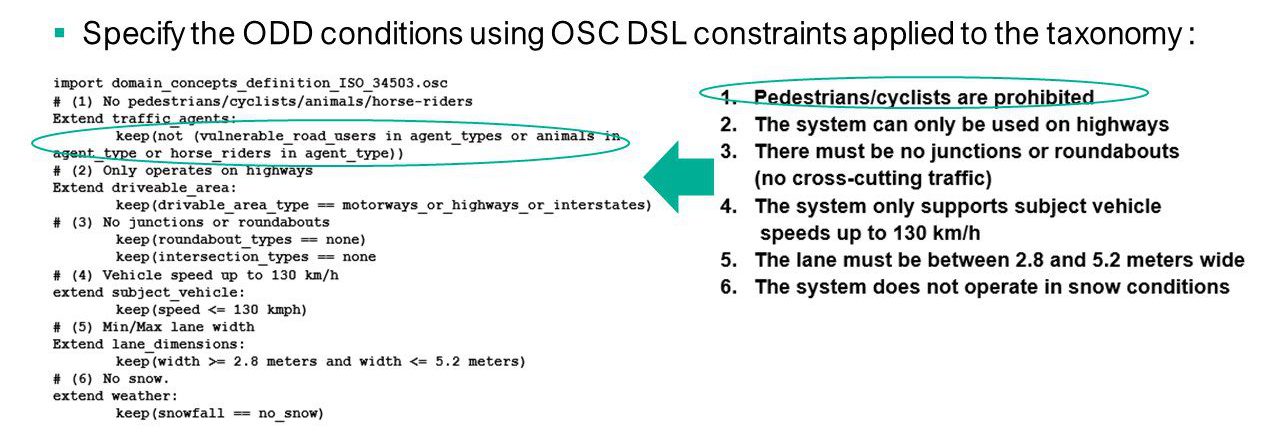
Indeed, ISO 34503 defines a taxonomy for ODD specification. The key question is how to model this taxonomy in OSC DSL.  OSC DSL programming language-like capabilities can be used to define a full taxonomy. So, yes, it is feasible and relatively simple to represent ISO 34503 taxonomy using OSC DSL and provides a standard vocabulary for ODD attributes like weather and road types. Once you have the taxonomy defined, you can set operational design limits by applying constraints on these attributes, such as only functioning in dry weather or on specific road types. The combination of a taxonomy and a set of constraints on the attributes – is a full ODD specification, all using native OSC DSL constructs.

Example: ALKS system ODD ( using UN Reg #157 )

Can you elaborate on the difference between ODDs and scenarios in V&V?

Sure. An ODD defines the “playing field” in which an Automated Driving System (ADS) was designed to operate safely, specifying factors like weather and road structures. Scenarios are like plays within that field, simulating various situations the ADS might encounter, such as merging onto a highway or handling unexpected stopped vehicles. OSC DSL provides a language to describe these scenarios, simplifying large-scale testing and coverage analysis.

ASAM OpenSCENARIO ® DSL – Large Scale V&V Targeted Language!

How can ODDs be modeled using OpenSCENARIO® 2.1 (OSC DSL)?

OSC DSL lets us model ODDs by setting constraints on all taxonomy attributes, such as environmental conditions.  As the ODD is modeled using OSC entities like classes, structures, and constraints, it can simply be incorporated (imported ) into the scenario code itself. Once the ODD definition is merged with the scenario, all relevant checks, KPI, and coverage monitors supplied by OSC DLS can be used to produce the relevant outcome of the scenario.  

How do coverage monitors help ensure a test suite comprehensively explores the boundaries of an ADS’s Operational Design Domain (ODD)?

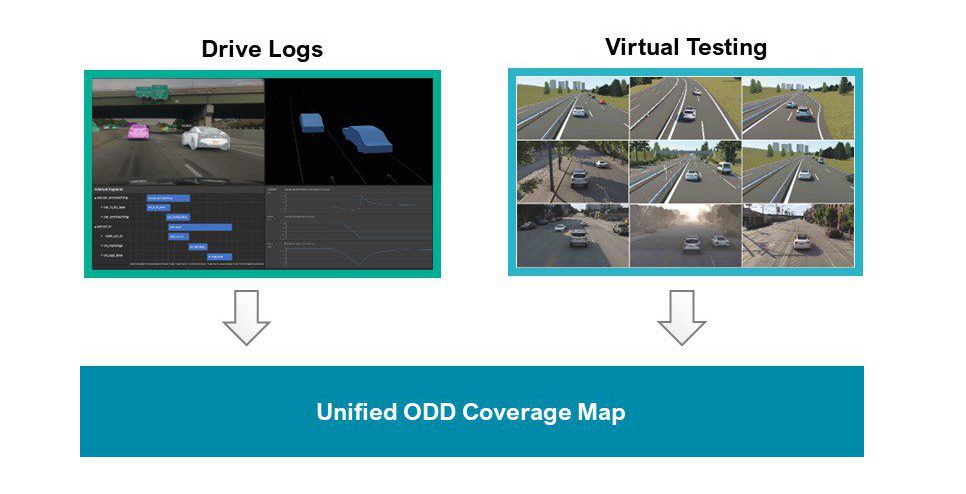
Coverage monitors are crucial for thorough testing. They can be reused across scenarios, track what parts of the ODD are tested, and identify gaps in coverage. By collecting and analyzing this data, they ensure the test suite comprehensively explores the ODD boundaries. In fact, Foretellix’ solution enables aggregation of ODD coverage data from all your various V&V/testing platform (see the following figure). 

ODD Coverage

How does this translate into V&V practices?

Here’s the exciting part. Test scenarios can reference the ODD entities defined in OSC DSL. This allows us to create checks and measurements within the scenario to evaluate the ADS’s behavior. Imagine a scenario where the ADS encounters unexpected rain – we can define a check to see if the ADS correctly triggers an ODD exit and transitions to a safe state. Even better, these checks and coverage monitors can be independent and reused across different scenarios, saving significant time and effort in creating comprehensive test suites. Plus, using a standardized language for scenarios and the ODD specification really improves communication across the board.

Safety assurance in ADS development is a critical bottleneck that many AV companies struggle with. How can OpenSCENARIO® 2.1 (DSL) improve V&V processes?

OSC DSL integrates ODDs and scenarios into a unified testing flow, providing consistent metrics and coverage towards the safety assessment. This makes it easier to run large-scale tests and get aggregated results across different platforms. By adopting OSC DSL, we can establish a more standardized and efficient V&V process, ensuring the safety and success of autonomous vehicles. 

This benefits manufacturers by streamlining development and gives consumers greater confidence in self-driving cars. Moreover, OSC DSL can extend to other automated systems, paving the way for safer transportation in the future.

Can you elaborate on the benefits of this approach?

Sure. With ODDs and OSC DSL, we can do a lot. We can run large-scale tests by creating different scenario variations, and we get aggregated results across various testing platforms, making analysis easier. This approach ensures comprehensive testing by systematically covering the entire ODD. It also allows us to optimize our testing efforts by zeroing in on areas that need more attention. 

There are two ways to assess ODD coverage. Can you explain the limitations of the simpler approach and how Foretellix addresses achieving a more robust ODD coverage strategy?

The simpler approach to ODD coverage involves checking each element of the ODD boundary individually, such as: highway driving, rain, and daylight. While this method ensures that each specific element is covered, it doesn’t account for the complexity and variety of real-world scenarios an ADS might encounter while operating within the ODD. For instance, it might miss combinations of elements, like driving on a highway during heavy rain at night, or it may miss various scenarios that can happen within the ODD, which are crucial for thorough testing.

Foretellix’s approach, known as “real ODD coverage,” takes a more comprehensive view. It includes all possible events and interactions within the ODD, acknowledging the multi-dimensional nature of the operational environment. Foretellix uses multi-platform coverage monitoring to track testing across virtual simulations, test tracks, and real-world driving logs. By analyzing the data, Foretellix identifies coverage gaps and prioritizes future testing efforts, ensuring a robust and systematic ODD coverage strategy. This method ensures that the ADS is tested under a wide range of scenarios, leading to a more reliable and safer autonomous vehicle.

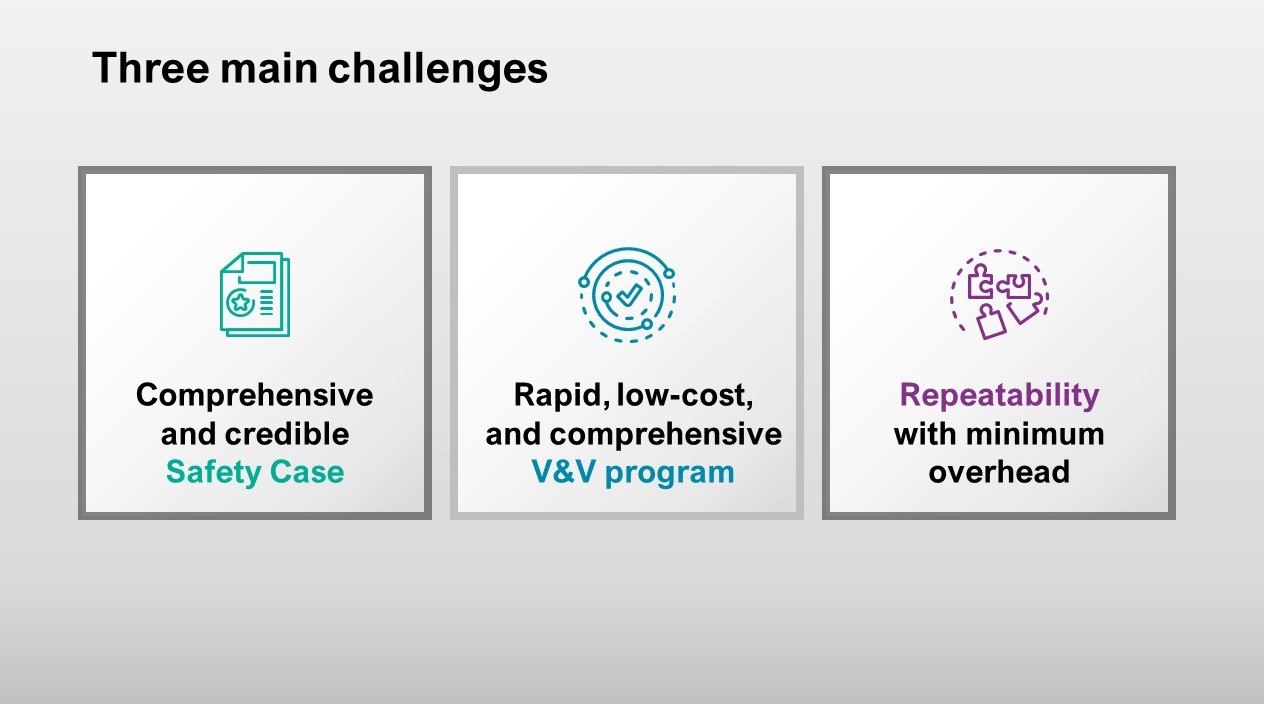
The autonomous vehicle (AV) industry is rapidly evolving, and AV technology developers are at the forefront of this exciting yet challenging endeavor. Ensuring the safety and reliability of AVs is paramount, and achieving this goal requires addressing three key challenges:

  1. Building a Comprehensive Safety Case:
    Public trust in AVs hinges on their safety credentials. The AV industry needs robust safety mechanisms and methods in place, along with clear demonstrations of their effectiveness. This involves rigorous testing, both in the real world and through sophisticated simulations, to continuously strengthen the safety argument for AVs.
  2. Validating AVs Quickly and Affordably:
    Traditionally, validating safety involved extensive real-world testing, which can be expensive, time consuming, and yet inadequate. The key lies in achieving a judicious mix of real-world and virtual testing environments. While real-world driving will continue to be a strong source of signal – and it is important to harvest maximum value from it – it is necessary to complement it with highly sophisticated virtual testing.
  3. Ensuring Scalable and Repeatable Validation Processes:
    As AV development progresses, validation processes need to be adaptable and reusable across different contexts. Imagine a well-oiled machine that can efficiently re-validate the safety of diverse AV applications without starting from scratch each time.

Optimizing the Validation Process: A Three-Part Strategy

  1. Strategic Use of Real-World Data:
    Real-world driving data is crucial, but gathering it extensively can be costly and impractical. The goal is to extract maximum value from each mile driven through advanced data analysis tools that can dissect and leverage this information efficiently, ultimately enhancing the overall validation process.
  2. Scaling Virtual Testing:
    Anyone who is serious about AVs is already engaged in virtual testing. There is no more debate about the need and benefits of virtual testing. However, the state of practice in virtual testing is still far below its full potential. It is crucial to achieve high efficiency and value from virtual testing. This involves, at minimum, automated generation of valid scenarios at scale, steering of virtual tests towards high-value test cases, and analysis of millions of test results in an effective manner.
  3. Achieving Comprehensive Operational Design Domain (ODD) Coverage:
    The ODD is the specific set of conditions under which an AV is designed to operate safely (e.g., weather, traffic, geographical location). Validating the AV across its entire ODD is essential. This involves creating detailed ODD coverage maps and utilizing efficient testing methodologies to ensure all relevant scenarios within the designated operational domain are thoroughly tested and validated.

Advanced Tools for Enhanced Validation

Foretellix offers a suite of tools and accompanying methodologies specifically designed to enhance the value of real-world and virtual testing, as well as to connect them into a seamless whole. The tools can:

  • Analyze Real-World Driving Data:
    After ingesting real-world driving logs, they identify scenarios, their distributions, and anomalies, streamlining the data analysis process for more efficient validation and identifying gaps in ODD Coverage, to be filled in via virtual testing.
  • Replicate Real-World Scenarios in Virtual Environments:
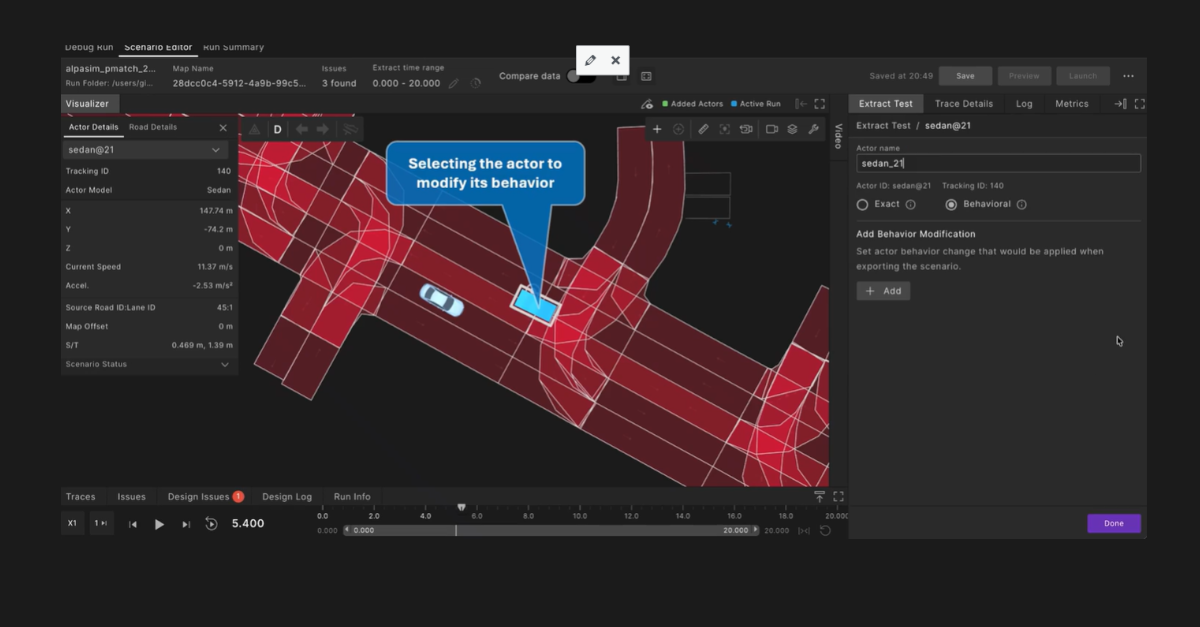
    Features such as “Smart Replay” enable fuzzing of scenarios far beyond the state of practice. Smart Replay enables changes to not just actor trajectories in the recordings, but also to actor behaviors (e.g. what if the actor had changed lanes instead of braking?), introduction of new actors, new risks, and potentially replaying the situation at different map locations.
  • Generate Diverse Testing Scenarios:
    Advanced scenario generation tools create thousands of unique and detailed test cases, facilitating comprehensive safety validation. These tools understand the physics and rules of driving, ensuring the generation of valid and relevant scenarios.
  • Simulate Sensor Systems:
    Integrating sensor simulation within testing environments creates a holistic validation approach that encompasses not just the vehicle’s decision-making algorithms but also its perception and sensor systems.
  • Navigate the ODD Efficiently:
    By creating clear ODD coverage maps and utilizing specific methodologies, these tools efficiently navigate the vast test space, ensuring that validation efforts are precisely targeted, covering all necessary scenarios while identifying and filling any gaps.

The Future of AV Deployment: A Collaborative Effort

By strategically integrating these tools and methodologies into development, testing, and validation workflows, the AV industry can enter a new era of safety, efficiency, and scalability in AV deployment. Addressing the challenges of building a strong safety case, achieving efficient validation, and ensuring repeatability head-on will not only accelerate AV advancements but also solidify the safety and reliability of autonomous vehicles, paving the way for their successful integration into everyday life.

The vision of safe and cost-effective autonomous driving deployments is not a distant dream. Through strategic focus, technological innovation, and a relentless commitment to safety and efficiency, we have the roadmap to navigate the challenges and opportunities that lie ahead on the path toward autonomous mobility.

Greetings and welcome to a brand new segment on our blog: Under the Hood featuring industry experts. In this series, we’ll be peeling back the layers and diving deep into the exciting new features that we’re developing here at Foretellix.

To kick things off, we’re thrilled to have Bindesh Patel, Foretellix’s Senior Product Manager for Foretify Manager join us. Bindesh has been instrumental in spearheading the development of the new triage features in Foretify Manager, a powerful new addition to our product line.

Today’s interview takes place in a Q&A format, giving you the chance to gain firsthand insights from Bindesh on the inspiration behind triage, its technical aspects, and how it will benefit  customers. So, put on your thinking caps and get ready to explore the exciting world of V&V triage.

Welcome Bindesh.

Thanks for having me. Foretellix offers a powerful platform called Foretify that lets you scale verification and validation (V&V) testing to handle a massive number of test scenarios. Alongside this, we introduced the concept of coverage metrics to objectively measure how complete your V&V process is. This was implemented with Foretify Manager acting as the central hub, reporting all these metrics throughout the V&V process.

Now, tracking completeness is important, but V&V projects also need to address the issues and bugs that get uncovered. Foretify expands the scope and depth of tests, along with the scalability, which naturally exposes more bugs. This is a good thing – we want to find bugs! But to handle this effectively, we need a whole new set of features. That’s why we recently added triage functionality to Foretify Manager. It automates the identification and clustering of all these issues into more manageable groups that are actionable.

“Actionable” means they can be easily assigned to team members for further debugging and analysis, and can also connect to other tools like ticketing systems. The benefit of all this is a boost in engineering productivity. Tasks that were previously done manually outside the workflow, in a fragmented and tedious way, can now be unified under Foretify Manager. Additional features have also been added to automate many of these triage-related tasks, leading to even greater efficiency.

Please explain the triage features of Foretify Manager

When you run scenario-based testing at scale, you typically get slammed with a huge number of errors, especially early on in the process. Foretellix technology lets us scale up the number of tests we run, and that naturally exposes more bugs – which is a good thing, we want to find them!

The challenge is figuring out which errors are the most common, and more importantly, which ones actually affect the system under test (SUT) and which don’t. Maybe they’re caused by the testing environment or other factors. Manually sorting through this at scale is nearly impossible, so it needed automation.

Foretify Manager tackles this by offering guided automation and data views that can be shared among users. This whole package minimizes the need for all those external tools like TDS scripts and spreadsheets.

Why is triage a significant pain point?

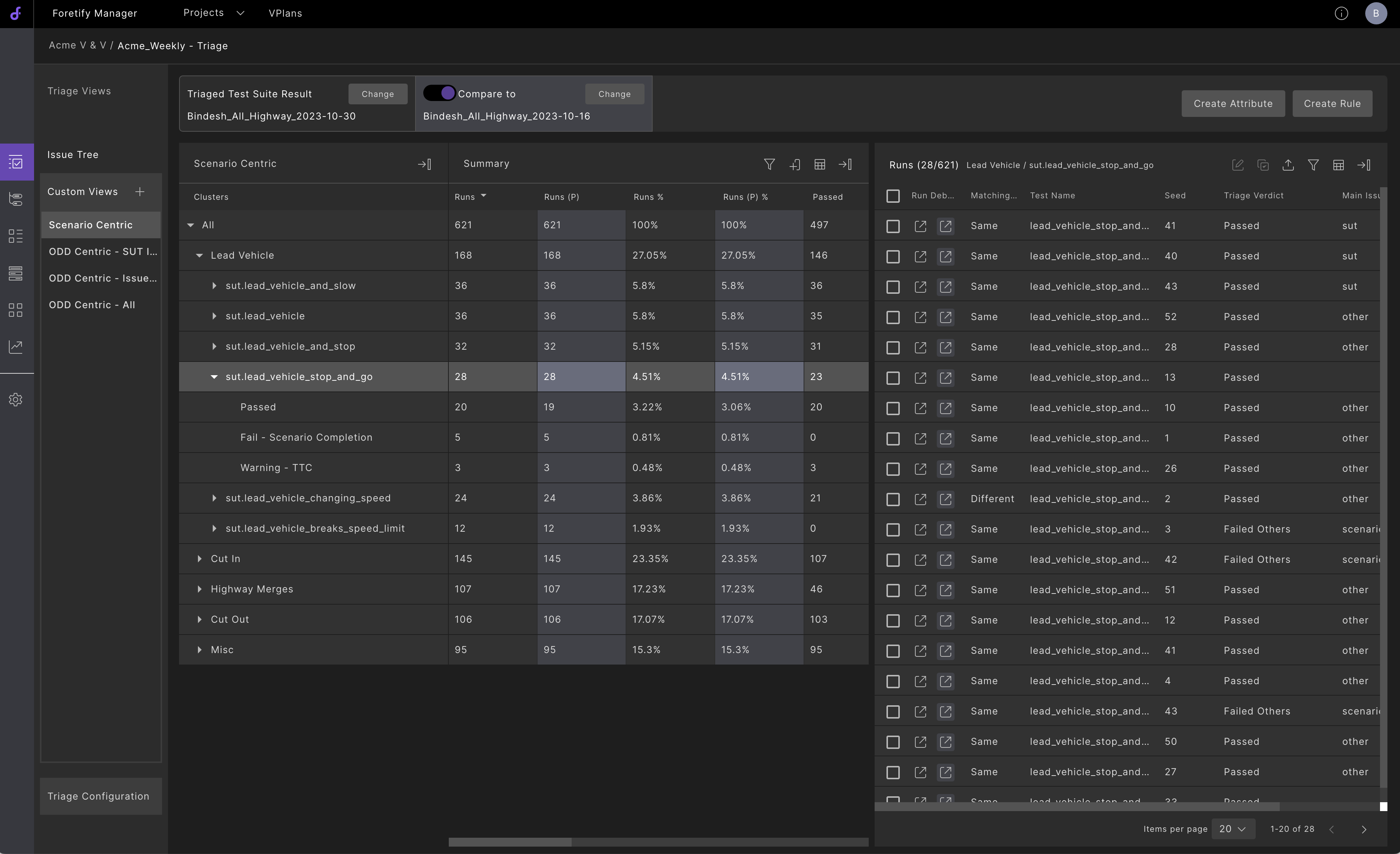
Triage in Foretify Manager is basically like giving you a toolbox to sort and group your issues. This is crucial. You can categorize them based on severity, the team or person responsible, priority, or even whether it’s a real bug or not. There are many factors at play, and Foretify Manager lets you tackle them all with this categorization system.

Now, this toolbox is built around the idea of “guided automation” through rules. You basically code these rules, and once they’re set up, they can automatically be applied to future tests and regression runs, saving you a lot of time.

How does the failure triage feature assist engineers in prioritizing and managing the large volume of issues reported from testing at scale?

Typically, users upload a test suite run to Foretify Manager for analysis. They’ve always done this to check completeness (coverage analysis) and analyze issues. The team would first use our features, which I mentioned before, to cluster and categorize issues into unique sets of similar problems that need further investigation.

This clustering is automated using pre-defined rules you create in Foretify Manager. It’s important because it saves time. Plus, the triage process is iterative, meaning the status of these clusters is constantly monitored and refined for quicker resolution – that’s the ultimate goal!

Once you have these automated clusters, they can be assigned to specific owners and even linked to other systems like JIRA, a bug tracking tool. After assignment, owners can easily use Foretify Manager’s existing debug features with just one click. This helps them get right to the root cause of the issue and ultimately fix the system under test (SUT).

Here’s another benefit: If a new regression test appears, say tomorrow or next week, Foretify Manager lets you compare it with previous runs using the same rules, clustering, and views. This helps you ensure your overall V&V process is improving over time.


How does the triage feature work with Foretify Manager?

We’ve mentioned a few features here and there, but let’s dive deeper into some key ones that make this all possible. One of the big things is the concept of attributes. These can be system attributes, like whether a test run passed or failed according to Foretellix. They basically act like key-value pairs.

Now, with triage, we let you create your own custom attributes. These can be set anywhere, from the runs table to the triage views we’ve discussed. But the main way to set them is through rules. You can define these rules either through the user interface or our Python SDK API.

These rules basically tell the system how to set attributes based on other data. The whole point of attributes and rules is to allow you to group similar test runs together.

Once you have these attributes set and the runs are clustered, you can use the customizable triage views inside Foretify Manager. These are basically hierarchical views of the clusters you’ve created based on all those attribute settings. They’re basically clusters that make sense for you – that’s the essence of clustering and categorization. And from there, you can take action on each cluster, as we discussed earlier.

On top of that, you can also set up user-defined aggregations. These let you easily answer complex questions, like “show me the collision rate in cutting scenarios where the speed was above 90 kilometers per hour.” You can easily set up these “aggregates” to display and analyze this kind of data. We also have powerful built-in filtering capabilities, which let you focus only on the relevant information.

All of this boils down to being able to compare test results from different runs, say from different points in time. This allows you to track the trends you’re interested in.

How does the triage feature boost efficiency and scalability in development?

Traditionally, test suite results are uploaded to Foretify Manager for analyzing coverage and key performance indicators (KPIs). Now, with this new built-in triage component, you can seamlessly perform triage tasks for your V&V projects within the same platform. It’s important to remember that without this, most of this work would be done manually and outside the system, maybe using spreadsheets or custom scripts.

Foretify Manager brings everything together. The key benefit? It eliminates data fragmentation, where information gets scattered and lost.

As we’ve discussed, you can set attributes within triage views. These attributes can define things like owners and even link to other tools like JIRA, a popular ticket tracking system. This way, individual owners can focus on the key issues assigned to them. They’ll see the corresponding JIRA ticket right there in Foretify Manager. With a single click, they can open that ticket directly in JIRA.

How do you recommend training engineers to effectively use the triage feature?

To help you get started, we offer a dedicated training module on failure triage. This covers both the methodology itself and how to use our tool effectively. It’s a great resource!

On top of that, our Applications Engineering Team (AET) has a wealth of experience in advanced V&V. They’re also very familiar with this new failure triage feature. They work closely with our customers to help them adopt both the capabilities and the methodologies around it.

Thank you for joining us today, Bindesh, and explaining the new triage features of Foretify Manager. Please visit the Foretify Manager page for more information.


The new solution enables AV training and validation with high–fidelity sensor simulation.  

Ensuring the safety and reliability of autonomous vehicles (AVs) while accelerating time to market and controlling development costs is paramount. Addressing these challenges, Foretellix integrated the NVIDIA Omniverse Cloud APIs to enable high-fidelity sensor simulation on the Foretify™ platform. The new solution revolutionizes the way AVs are trained and validated by providing physically based, high-fidelity, end-to-end simulation at scale. The new solution will benefit both emerging AV stacks that rely on end-to-end AI training and stacks that comprise separate perception and planning subsystems. 

This week, NVIDIA and Foretellix are demonstrating the enhanced sensor-simulation workflow at GTC.

“With high-fidelity sensor simulation, the Foretify platform delivers a complete toolchain for training and validating autonomous vehicles,” said Ziv Binyamini, Foretellix CEO and co-founder. “By integrating the NVIDIA Omniverse Cloud APIs, we enable customers to streamline and automate the development process, reduce development costs, and accelerate the deployment of autonomous technologies on a global scale.” 

“The AV industry is expanding the use of end-to-end AI models, which require physically based sensor simulation,” said Zvi Greenstein, Vice President of Autonomous Vehicle Infrastructure at NVIDIA. “By leveraging NVIDIA Omniverse Cloud APIs, Foretellix is enhancing its Foretify toolchain with new sensor simulation capabilities and setting a new standard for AV development and validation.” 

The Need for High-Fidelity Sensor Simulation  

Modern AVs rely on multiple sensors, including video cameras, radars, and lidars, to generate an accurate worldview. The AV must accurately identify, track, and react to many actors, including other vehicles, pedestrians, cyclists, and more. It must also handle real-world aspects such as weather, light and road conditions, and sensor degradation. However, real-world data collection for training and validation is an extensive and costly effort, including test drives, data logging, and labeling.  

While object-level virtual simulation is broadly used to validate the planning and control system, sensor simulation is required to validate the perception system. Furthermore, emerging AV solutions rely on sensor data to train and validate the AI end-to-end.  However, achieving sensor simulation that accurately reflects the behavior and physics of the real world at scale is incredibly challenging. 

Performance and safety issues often result from the interaction between the perception and the planning and control subsystems. When these subsystems are validated separately, some issues can appear only during real-world tests. To ensure the safe operation of the AV, in addition to sub-system validation, the entire system needs to be validated from end to end under a large variability of driving scenarios, perception conditions, and locations. 

Virtual End-to-End V&V 

Foretellix and NVIDIA can deliver physically accurate, virtual, end-to-end validation at scale by enabling high-fidelity sensor simulation via the Omniverse Cloud APIs. The integration provides seamless access to NVIDIA’s breakthrough sensor simulation performance and Foretellix’s state-of-the-art automated test generation and monitoring technology. 

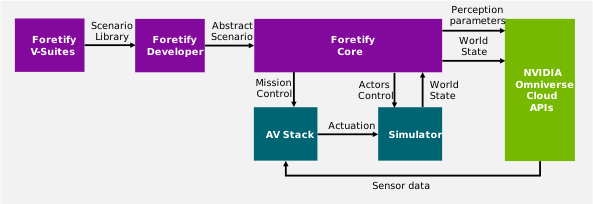
Foretellix customers can leverage abstract scenarios to automate the generation of end-to-end tests, perform large-scale triage, assess performance and KPIs, and measure ODD coverage. Figure 1 below shows a high-level diagram of the test development flow. 

Figure 1 – Virtual V&V development flow

The Foretify Core test generator uses abstract scenarios created by customers using Foretify Developer or ready-made scenarios imported from V‑Suites – the industry’s most comprehensive OpenSCENARIO® 2.0 (DSL) library – to generate and execute concrete tests comprised of multiple actors, including maneuvers and perception parameters. It provides mission control information to the AV stack, actor control commands to the simulator, and world-state and perception parameters to the NVIDIA Omniverse Cloud APIs. 

The Omniverse Cloud APIs render physically accurate sensor data based on the simulated world state and the provided perception parameters. It delivers the sensor data to the AV stack, which processes it and generates actuation commands for the simulator. 

Foretify Core executes the test by controlling the simulator at runtime. It uses advanced behavioral models to dynamically control and adjust each actor’s actions during simulation execution to achieve the scenario intent. Foretify Core is pre-integrated with most industry-leading simulators and can also integrate with OEM proprietary platforms, such as the Nuro simulator, as demonstrated at NVIDIA GTC.  

With these new capabilities, the Foretify Platform can measure ODD coverage across multiple perception parameters to analyze and report which conditions have been tested in various driving scenarios. This significantly improves the ability to assess the system’s safety and testing efficiency. 

High-Fidelity Reconstruction and Smart Replay of Drive Logs 

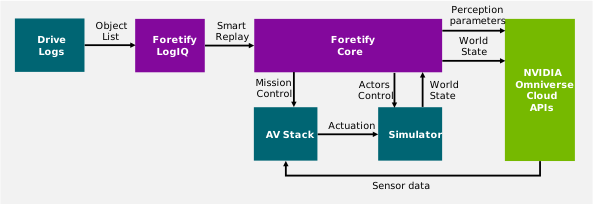
Companies developing AVs collect a huge amount of drive logs through physical drives. Storing all sensor data requires enormous storage space; thus, often, only object-level information is stored. Foretify LogIQ enables object-level drive log ingestion into the high-fidelity virtual simulation flow to reconstruct and replay a physically accurate sensor-level simulation of the drive log (Figure 2). This provides significant time and cost savings in developing, debugging, and issue resolution. In addition, the Foretify Smart Replay capability can generate variations of the original drive log, including perception parameter variations and maneuver modifications, to improve the validation of new AV software versions. 

Figure 2 – Drive Log Replay Flow

Generate Synthetic Data Sets for Training 

Retraining AI systems is often required when the AV underperforms in certain conditions, such as unknown edge cases found during validation in physical driving or virtual simulation. Using Foretellix Foretify and NVIDIA Omniverse Cloud APIs, developers can now automatically generate a large number of sensor-accurate data sets to train the AV. This is especially useful when it is unsafe, costly, or difficult to recreate similar conditions in a test drive. 

Enhance Safety, Improve Time to Market, and Reduce Development Costs 

The Foretify platform with Omniverse Cloud APIs powers a major shift in AV testing, accelerates AI training, enables much higher utilization of drive logs, and improves the synergy between physical drives and virtual testing. It enables OEMs and AV developers to perform end-to-end, physically accurate simulations to help improve AV performance and safety, accelerate time to market, and reduce development costs. 

To learn more about the Foretify platform, visit www.foretellix.com/foretify-toolchain-overview/. To learn more about NVIDIA Omniverse Cloud, visit www.nvidia.com/en-us/omniverse/. 

Ensuring the safety of Autonomous Vehicles (AVs) requires testing millions of scenarios using virtual simulation to cover the nearly infinite number of scenarios that AVs might encounter. The goal is to ensure thorough ODD coverage and uncover edge cases that could be a significant safety risk. Doing this efficiently and economically is a considerable challenge for the AV industry. 

Maintaining our leadership in safety-driven V&V technology, we are thrilled to announce the Foretify 2024 release featuring Foretellix’s newest constrained-random test generation technology. The new test generator represents the culmination of tens of man-years of research and development, leveraging technology proven over decades of verification and validation of highly complex systems. The new Foretify release delivers 10X performance improvement compared to the previous generation. It is the automotive industry’s most efficient test generation, execution, and management solution.  

Foretify utilizes the latest ASAM OpenSCENARIO® 2.0 (DSL) scenario description language to deliver best-in-class V&V automation at scale. Foretify dramatically reduces the tedious, manual effort of creating tests by automating the generation of an unlimited number of concrete, meaningful, and valid test scenarios to cover the ODD optimally. It also stresses edge cases and exposes unknowns to identify safety and performance issues. It has driving domain semantic awareness, which enables it to choose parameter values consistent with each other, all system constraints, and the laws of physics.  

Early customers using the new Foretify release have reported over 10X improvement in the test generation and execution time of complex scenarios. This translates to higher efficiency, more productivity, shorter time to market, faster ODD expansion, and cost savings in developing and validating advanced ADAS and AVs. 

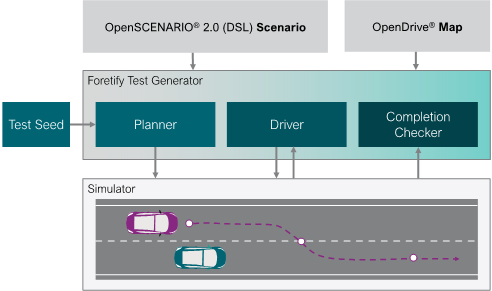
Figure 1 shows a high-level diagram of the Foretify Test Generator. The Test Generator receives an OpenScenario® 2.0 (DSL) scenario and an OpenDRIVE® map as inputs. The Planner automatically chooses a location on the map where the scenario can be executed as intended, and it calculates initial waypoints for each of the scenario actors while considering all global and scenario constraints. Changing the test seed automatically creates a new scenario variant at a different map location with random scenario parameters within the given constraints. The Driver executes the test by controlling the simulator and the AV stack at runtime. It uses advanced behavioral models to dynamically control and adjust each actor’s actions during simulation execution to achieve the scenario intent. The Completion Checker checks that the scenario intent captured in the OpenSCENARIO 2.0 code is achieved and automatically flags incomplete scenarios. 

Figure 1 – The Foretify Test Generator

Foretify is the leading Safety-Driven V&V platform. The platform is used by engineers at OEMs, Tier-1 suppliers, and AV stack providers to accelerate the development and deployment of safe Automated Driving Systems and ADAS.  

For more information about the Foretify platform, visit www.foretellix.com/foretify-platform.
To request a demo, please get in touch with us at info@foretellix.com.